Introduction
Every hydraulic system generates heat as fluid moves through pumps, valves, and cylinders under pressure. If that heat isn’t managed properly, it can degrade the oil, damage seals, and shorten the life of expensive components. This is where a hydraulic oil cooler becomes one of the most important parts of any hydraulic circuit. Whether you run industrial machinery, construction equipment, or mobile hydraulics, understanding how a hydraulic oil cooler works can help you choose the right one and avoid costly downtime.
In this guide, we’ll break down what a hydraulic oil cooler does, how it works, the different types available, and what to look for before you buy.
What Is a Hydraulic Oil Cooler?
A hydraulic oil cooler is a heat exchanger designed to remove excess heat from hydraulic fluid as it circulates through a system. As oil passes through pumps and valves, friction and pressure changes cause its temperature to rise. Without a cooling mechanism, the fluid can overheat, losing its lubricating properties and viscosity. A hydraulic oil cooler pulls this heat away, usually by transferring it to air or water, and returns the oil to the system at a safe operating temperature.
This simple but critical function protects the entire hydraulic circuit, extending the service life of pumps, motors, cylinders, and seals.
Why Hydraulic Systems Need Cooling
Hydraulic fluid typically operates best within a specific temperature range, often between 100°F and 140°F (38°C to 60°C), depending on the fluid type and system design. When temperatures exceed this range, several problems can occur:
- Reduced viscosity — thinner oil fails to lubricate moving parts effectively
- Oxidation — high heat accelerates fluid breakdown and sludge formation
- Seal degradation — rubber and elastomer seals harden and crack faster in high heat
- Component wear — pumps and motors experience increased internal friction
- System inefficiency — hot fluid can cause erratic valve behavior and pressure loss
A properly sized hydraulic oil cooler prevents all of these issues by keeping fluid temperature within the manufacturer’s recommended range, no matter how demanding the duty cycle.
How a Hydraulic Oil Cooler Works
Most hydraulic oil coolers function on a straightforward heat exchange principle. Hot hydraulic fluid flows through a series of tubes, plates, or channels within the cooler. Meanwhile, a cooling medium — either ambient air or water — flows across or around these channels, absorbing and carrying away the heat.
Depending on the design, this process may involve:
- Forced air convection — a fan pushes air across finned tubes carrying hot oil
- Water circulation — cool water flows through a separate set of tubes or plates, absorbing heat from the oil
- Natural convection — in smaller systems, ambient airflow alone may be sufficient
The cooled oil is then returned to the reservoir or directly back into the hydraulic circuit, ready to continue lubricating and powering system components.
Types of Hydraulic Oil Coolers
Air-Cooled Hydraulic Oil Coolers
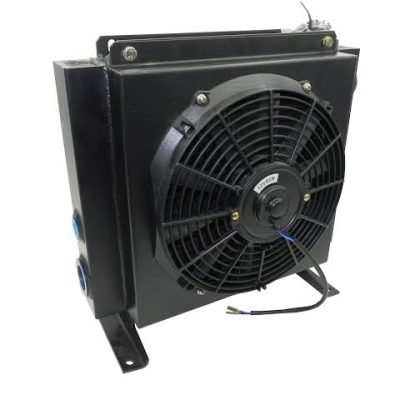
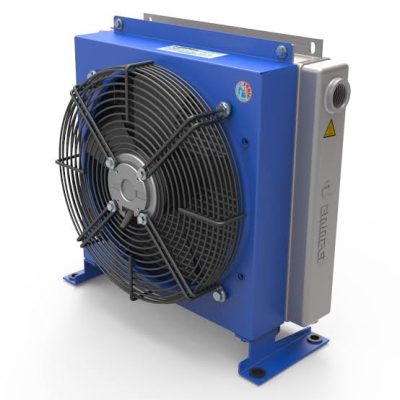
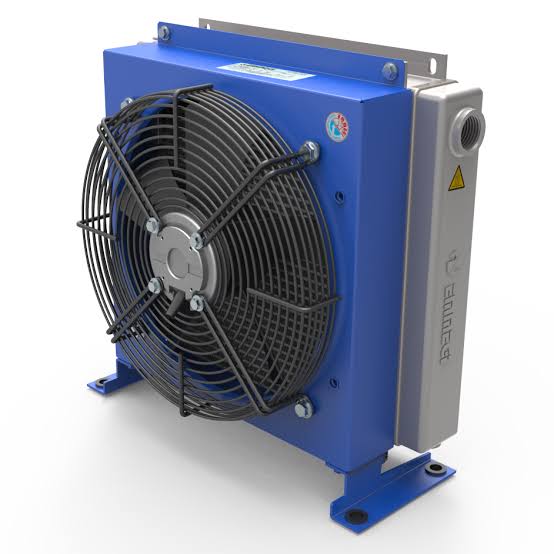
Air-cooled units use a fan to blow ambient air across a finned tube or bar-and-plate core. These are popular because they don’t require a separate water source, making them ideal for mobile equipment, remote job sites, and applications where water isn’t readily available. They’re relatively easy to install and maintain, though performance can be affected by high ambient temperatures.
Water-Cooled Hydraulic Oil Coolers
Water-cooled hydraulic oil coolers use a shell-and-tube or plate design where cool water flows in contact with hot hydraulic oil. These units are generally more compact and efficient than air-cooled versions, making them a good fit for indoor industrial settings where a water supply is available. However, they require plumbing infrastructure and consistent water quality to avoid scaling or corrosion.
Oil-to-Oil Coolers
In some specialized systems, a secondary cooling fluid loop is used instead of air or water. This setup is less common but useful in applications where neither air nor water cooling is practical.
Key Applications of Hydraulic Oil Coolers
Hydraulic oil coolers are used across a wide range of industries, including:
- Construction equipment — excavators, loaders, and cranes
- Agricultural machinery — tractors and combines
- Manufacturing plants — injection molding machines and industrial presses
- Marine applications — ship steering and deck machinery
- Mining equipment — heavy-duty hydraulic systems operating in harsh conditions
- Material handling — forklifts and hydraulic lifts
In each case, the goal is the same: keep hydraulic fluid within its optimal temperature range to maintain system reliability and performance.
Signs Your Hydraulic System Needs a New Oil Cooler
If you’re experiencing any of the following symptoms, it may be time to inspect or replace your hydraulic oil cooler:
- Hydraulic fluid consistently running hotter than normal
- Frequent seal failures or leaks
- Reduced system responsiveness or erratic cylinder movement
- Visible discoloration or a burnt smell from the hydraulic fluid
- Increased frequency of fluid changes due to degradation
Ignoring these warning signs can lead to more expensive repairs down the line, including pump failure or complete system breakdown.
How to Choose the Right Hydraulic Oil Cooler
Selecting the correct hydraulic oil cooler involves more than picking the first option you find online. Consider the following factors:
1. Heat Load Calculation Determine how much heat your system generates based on pump horsepower, duty cycle, and ambient conditions.
2. Flow Rate Match the cooler’s flow rate capacity to your hydraulic system’s pump output (measured in GPM or LPM).
3. Ambient Operating Conditions Air-cooled units may struggle in extremely hot climates, while water-cooled units need a reliable water source.
4. Space and Mounting Constraints Mobile equipment often requires compact, lightweight coolers, while stationary industrial systems have more flexibility.
5. Pressure Rating Ensure the cooler can handle your system’s operating pressure without risk of failure.
6. Maintenance Requirements Air-cooled coolers generally need periodic cleaning of fins, while water-cooled units require monitoring for scale buildup.
Buying a Hydraulic Oil Cooler Online
Many suppliers now offer a wide selection of hydraulic oil coolers online, making it easier to compare specifications, prices, and reviews before making a purchase. When buying a hydraulic oil cooler online, look for:
- Detailed technical specifications (flow rate, heat dissipation capacity, pressure rating)
- Manufacturer warranties and after-sales support
- Compatibility with your existing hydraulic system
- Customer reviews and case studies from similar industries
Buying directly from a manufacturer or an authorized industrial supplier ensures you get genuine components with proper documentation and support.
Maintenance Tips to Extend Cooler Life
Once installed, a few simple maintenance habits can keep your hydraulic oil cooler performing efficiently for years:
- Clean air-cooled fins regularly to prevent dust and debris buildup
- Check water-cooled systems for scale or mineral deposits
- Monitor fluid temperature regularly with a gauge or sensor
- Inspect hoses, fittings, and seals for leaks
- Replace hydraulic fluid according to the manufacturer’s recommended schedule
Conclusion
A hydraulic oil cooler is a small but essential component that protects your entire hydraulic system from the damaging effects of overheating. Whether you choose an air-cooled or water-cooled design, proper sizing, installation, and maintenance are key to getting the most value out of your investment. As you research options, take the time to compare specifications and buy from a trusted supplier to ensure long-term reliability and performance.